This page provides a private resource for external reviewers to access materials related to my Promotion and Tenure application at Florida State University (FSU). It is not available through the above menu in my website. Each link will open in a new tab. To return to this page, click back to the original tab or use the link provided.
Introduction
I maintain an active studio practice and exhibit in nationally recognized venues, exemplary of the research responsibilities for my position of Assistant Professor at FSU. I am Area Head of Ceramics and teach courses at all levels in the area as well as seminars in the graduate program. This page addresses my research and links to supplemental information including my Academic CV and Discussion of Research, Teaching, and Service which highlight accomplishments in each category.
Links
Professional CV
Academic CV
Discussion of Research, Teaching, and Service
Article – Light, Intention, and Atmosphere – Pottery Making Illustrated 2023
Instagram
Links to Exhibitions
Intentional Acts – Plough Gallery Tifton, Georgia
Conveying – Schaller Gallery Baroda, MI
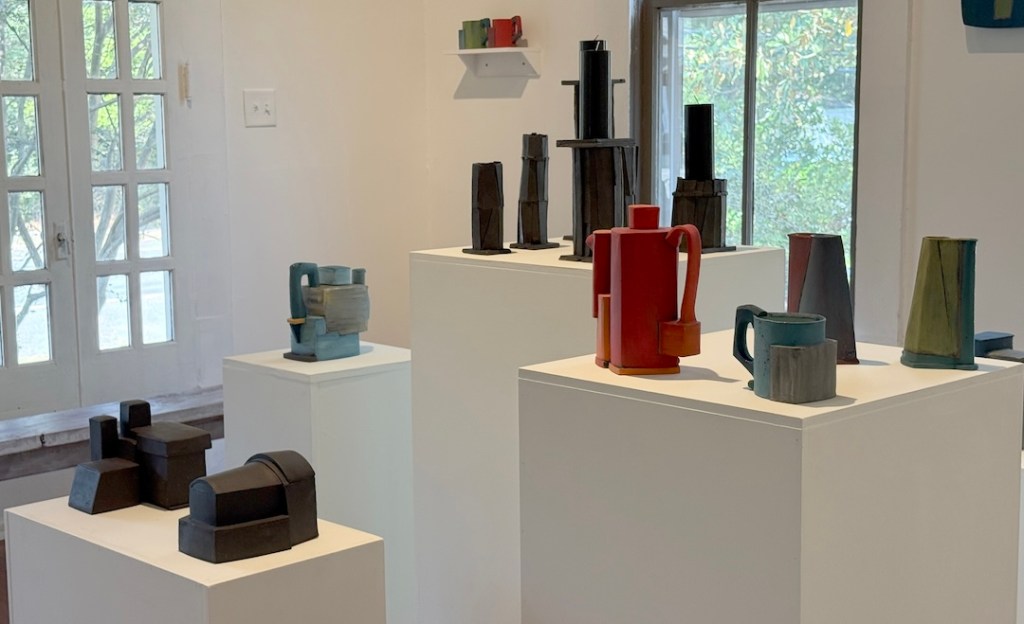
Solo Show: Marty Fielding – ClayAkar Iowa City, IAInstallation View of Intentional Acts, Plough Gallery, 2025
Research
My ceramic vessels draw on architecture and color symbolism to communicate emotional responses. I am currently pursuing two related yet distinct lines of research that apply their own specificity to this general description. The Abstracted Archetypes series draws on modern and post-modern architecture, abstract painting, and color theory to re-envision conventional pottery forms. Ritual Objects examines personal and collective grief through a series of ritual objects that reference reliquaries, urns, and candle votives.
Abstracted Archetypes
Early in my career, I was influenced by historical and contemporary pottery – Shino and Oribe ware and the Hamada-Leach tradition. As my exploration of abstracting pottery forms developed, I began looking outside of ceramics for inspiration. I was captivated by architects like Frank Gehry and Steven Holl who broke from conventional architectural design and proved that buildings could defy preconceived aesthetic expectations. Similarly, my research in color paired with the geometric forms I build led to studying painters like Mark Rothko and Sean Scully for their use of color and shape to communicate emotions and for their mark-making.
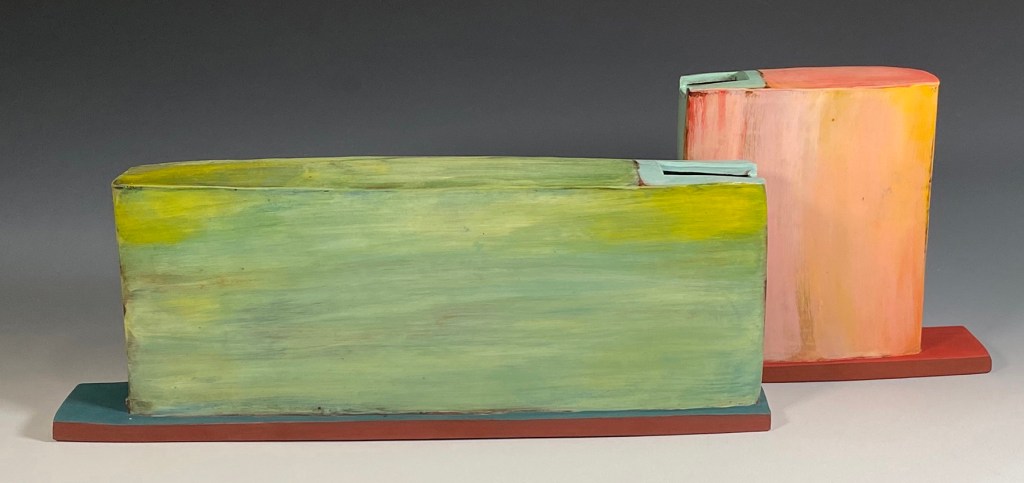
Bringing these architectural and painterly influences to my approach to working with clay, I construct sculptural ceramic vessels comprised of intersecting geometric shapes. By exaggerating proportions and visual mass, the forms express a sense of monumentality for objects of modest scale. I layer the surfaces with saturated ceramic pigment leaving edges of the lower layers visible and embracing the texture and movement of brushstrokes. The synthesis of architecture and vessels provides a dimensional canvas that culminates as utilitarian 3D Color Field paintings.Coffee Pot, 2023, 10”H x 6”W x 4”D
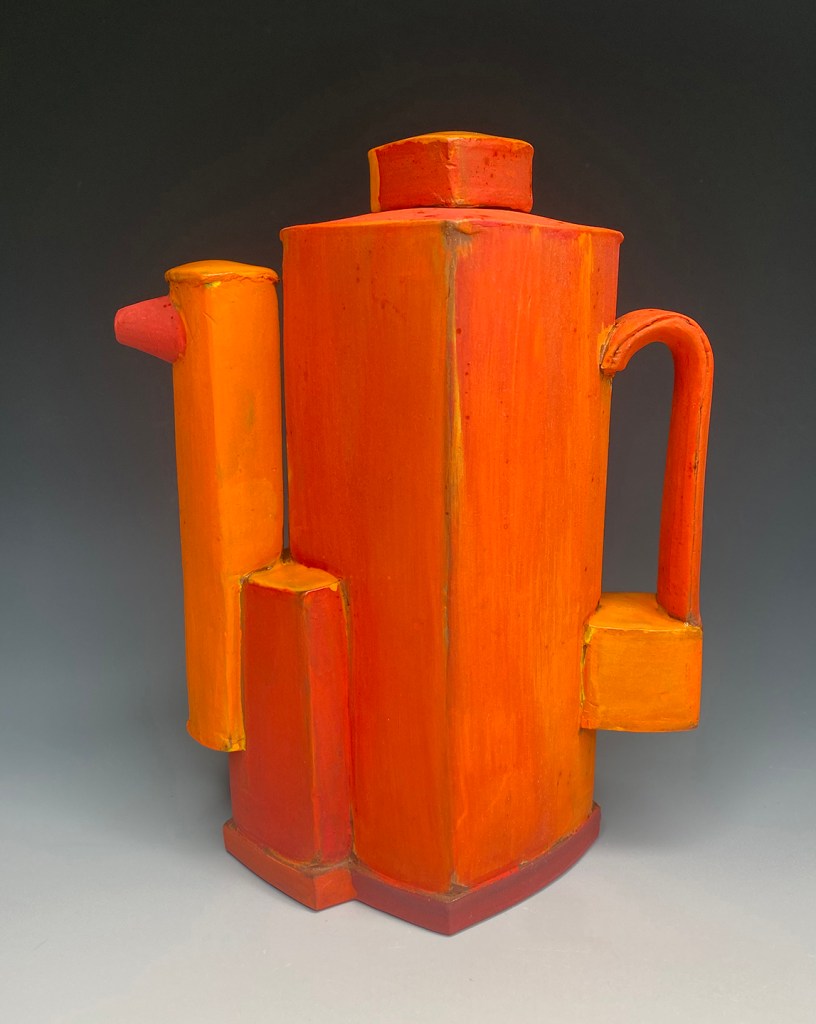
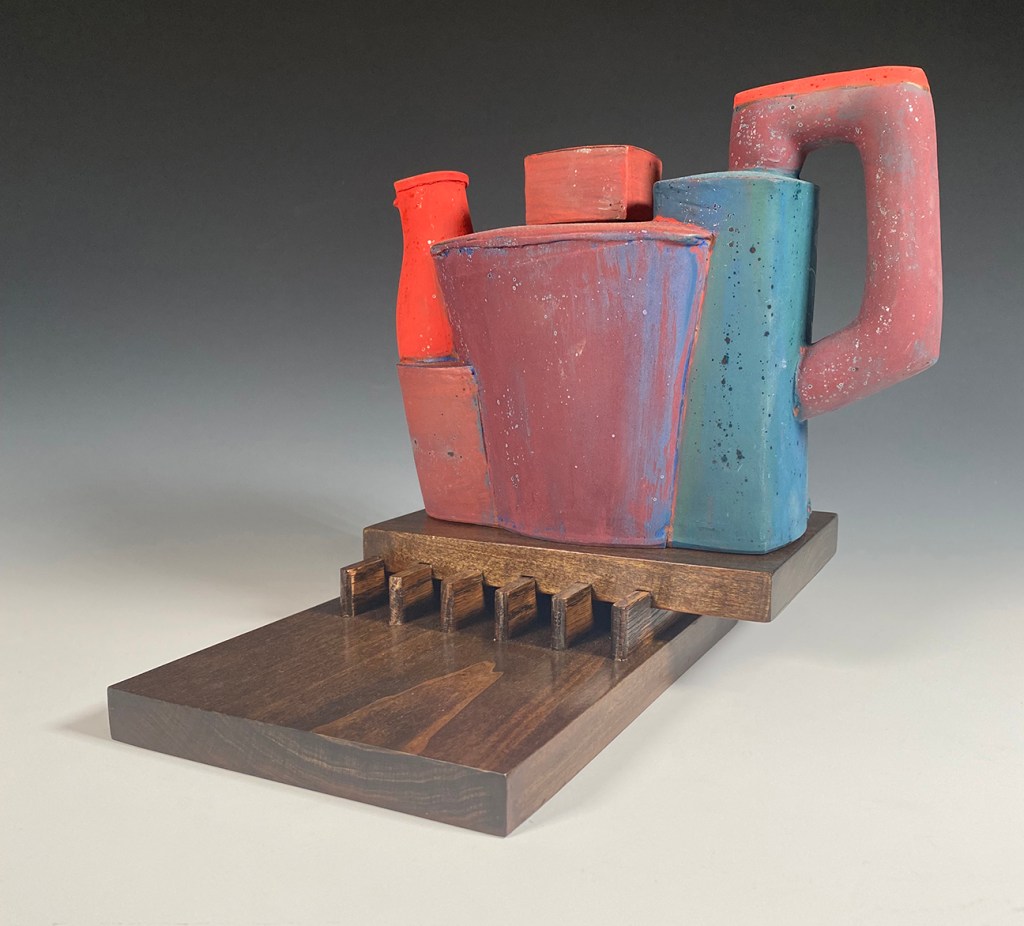
Color has the power to produce a visceral reaction. In my work, I harness the potential for color to evoke emotional associations in the viewer. My decisions for color combinations vary depending on the feeling communicated: tranquility, invigoration, exasperation, or repose. Ongoing research on color theory from texts by Johannes Itten, Josef Albers, and Emily Noyes Vanderpoel and well as social critiques of color use like Chromophobia by David Batchelor provide a foundation for my sensibility for color interaction. I find that contrasting complimentary colors creates more formal and conceptual tension while analogous combinations unify forms and can elicit a range of responses from calmness to fury depending on the symbolic associations of the colors used.Teapot and Trivet, 2026, 6″H x 9.5″W x 7″D
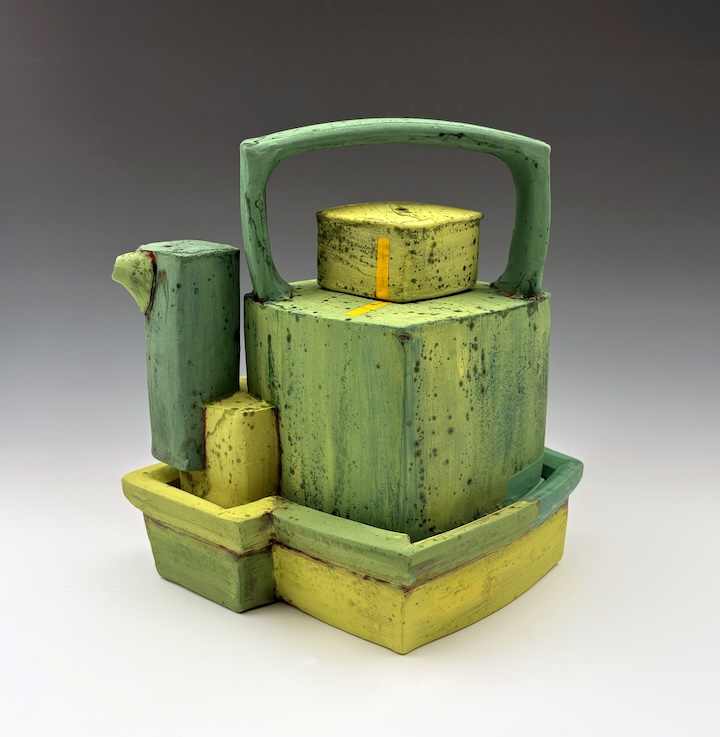
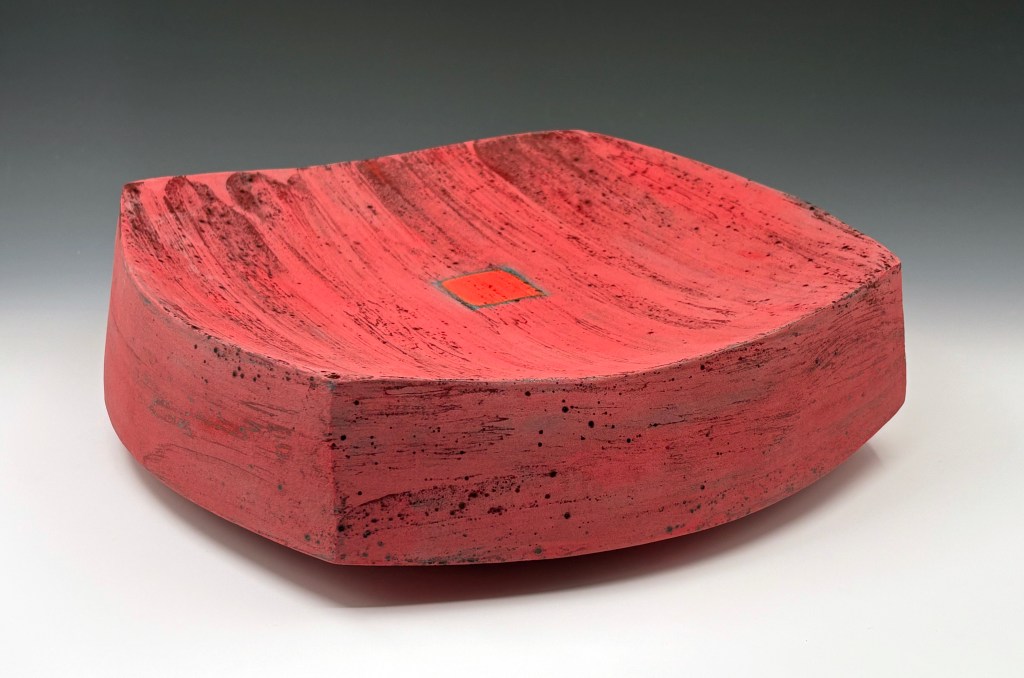
I employ the combination of form and surface to convey and evoke emotional responses. For instance, gaining the awareness that I seek a calming environment as a coping mechanism led to discovering that color combinations like pale blues and greens with yellow-orange accents to create a relaxing effect. The visual mass of the forms communicates a sense of protection. For a contrasting emotional effect, I use purple and deep reds express anger or anxiety related to current events.Basin, 2023, 4:H x 12″W x 5″D
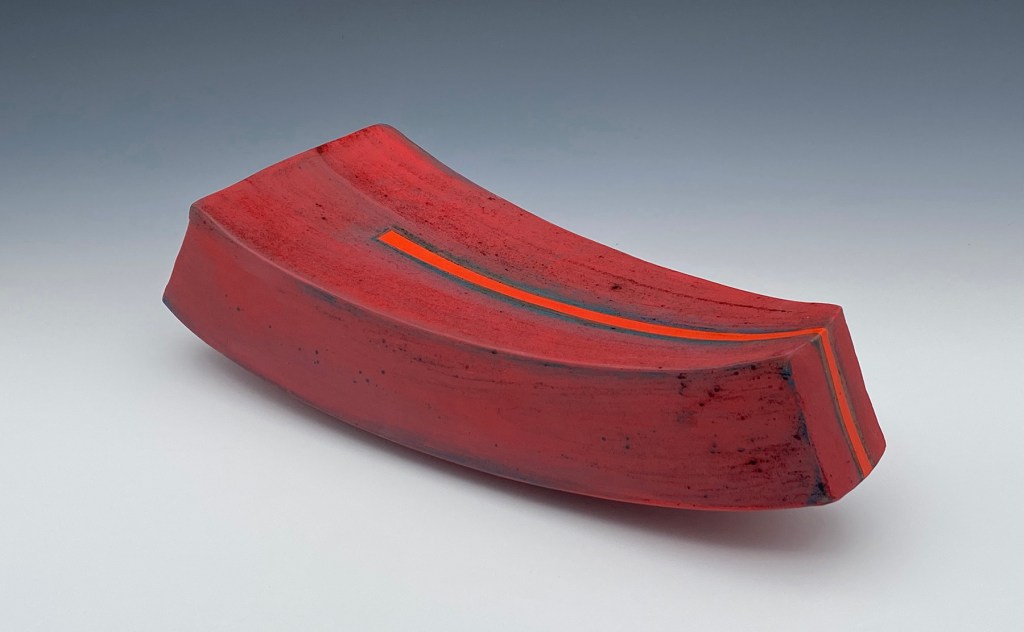
After many years of working with clay, my sense of wonder for the material continues. Each piece starts as an unrealized malleable mass that can be manipulated yet retain its shape. Definition can be added as the material dries, and it can be transformed into stone through human-guided geologic processes. Humans have shaped clay into necessary utensils and objects of cultural expression for 30,000 years. My work is faithful to this history by embracing utility and exploring contemporary means of visual communication. Working within the parameters of function allows me to achieve two important goals. The first goal is offering an interactive experience through use. Though the work has a sculptural character, it is crucial to me that spouts pour well and lids fit, and that the pieces give a moment of contemplation when in use. Secondly, the functional parameters allow the work to question the aesthetic conventions of archetypal pottery forms. By reimagining a teapot or container through an architectural lens, I abstract the form to the point where it is simultaneously unfamiliar and recognizable. This can lead to a moment of discovery in the viewer that entices further investigation through sight, touch, and use.
Ritual Objects
The second body of work examines how bereavement can be expressed through the context of a ritual object such as an urn or candle votive. Grieving is a universal experience that involves numerous emotions. Grief is often thought of as a individual experience, but it can be a endured collectively and applied to concepts like the loss of a societal consensus of truth. For instance, the National Institutes of Health has published a case study on the emergence of ecological grief: the emotional response to losses attributed to climate change.
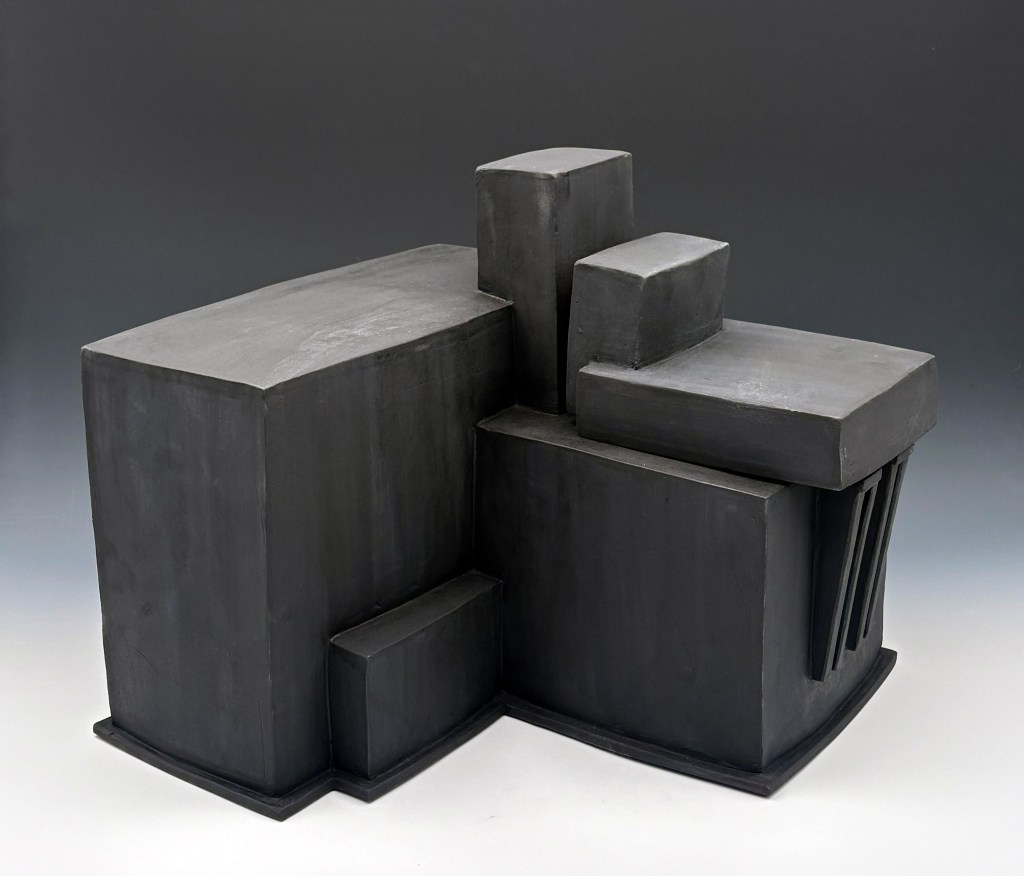
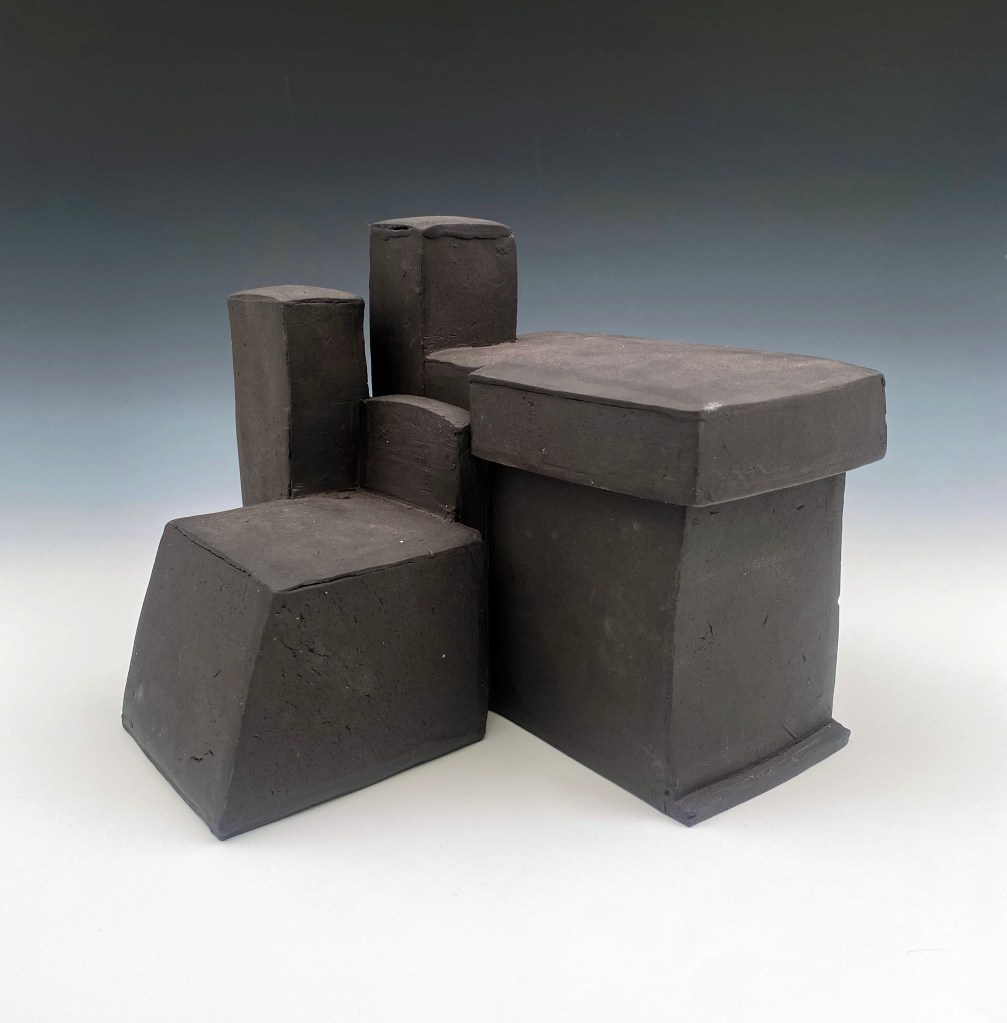
Principle Monument, 2025, 10”H x 13”W x 13”D
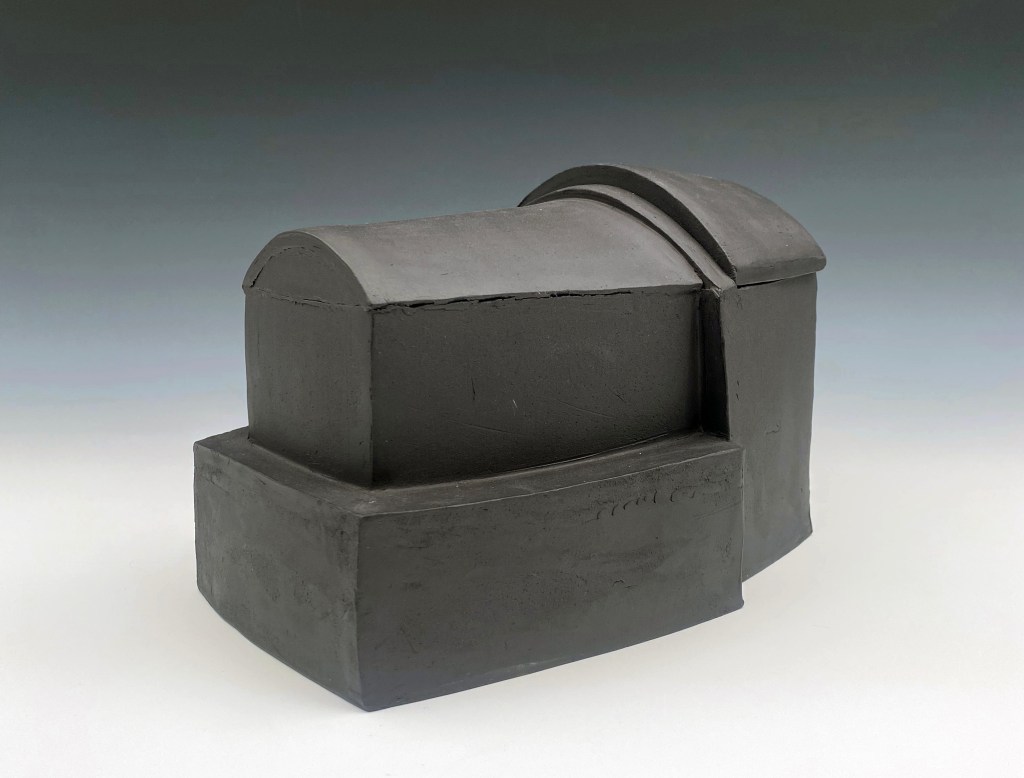
This research began during an artist residency at CRETA Rome in 2024. I have been enamored with Etruscan pottery for decades and have spent time teaching in Italy with the University of Georgia program based in Cortona, Italy. During the residency in Rome, I studied Etruscan bucchero ware in museums and spent time at Necropolis Banditaccia. The necropolis is the burial site for the ancient Etruscan city of Cerveteri that has been partially excavated making a variety of tombs accessible. The tomb architecture provided a point of departure for my developing urn and reliquary forms. The unglazed black surface of this work references the burnished, carbonized bucchero ware and acts as a signifier of mourning. Much of the Etruscan pottery displayed in museums was discovered as grave goods in tombs, utensils buried with individuals to supply them with necessities for the afterlife. Although it was also used for household purposes, bucchero ware was most often reserved for burials.
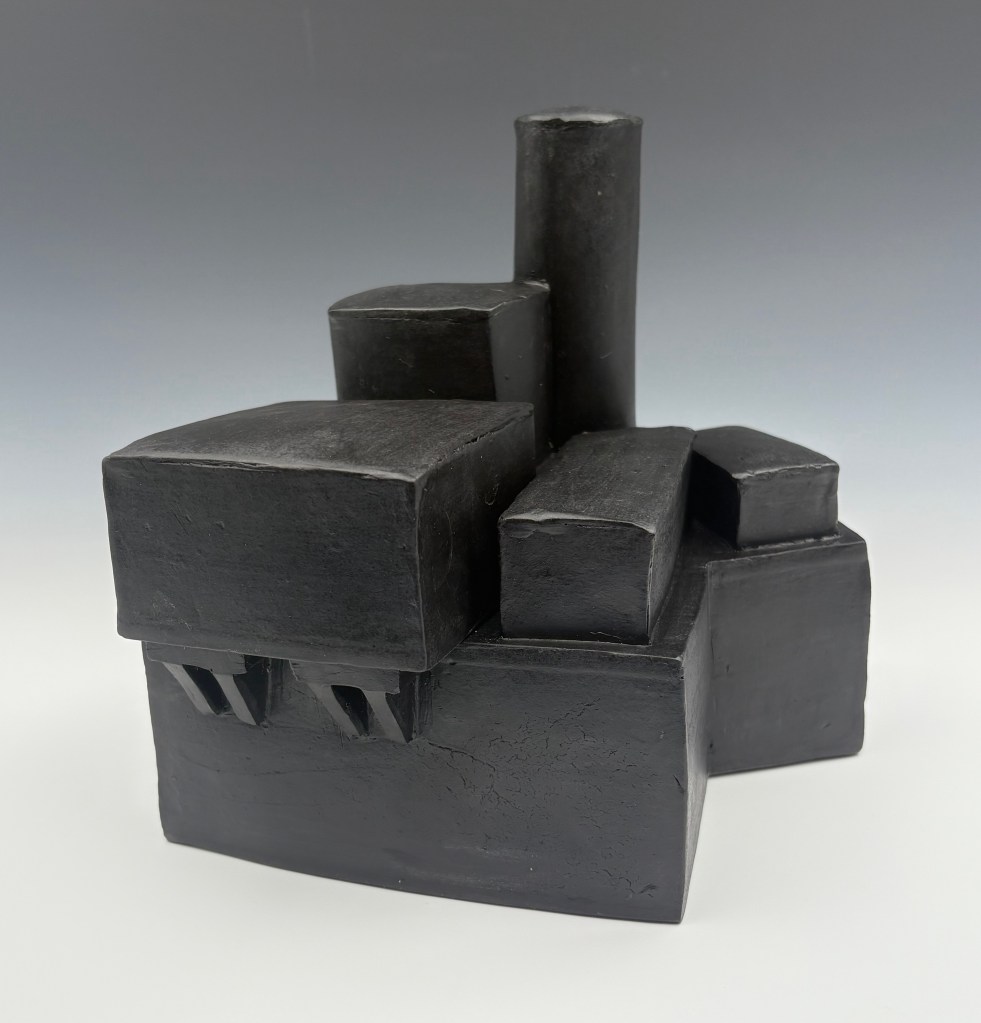
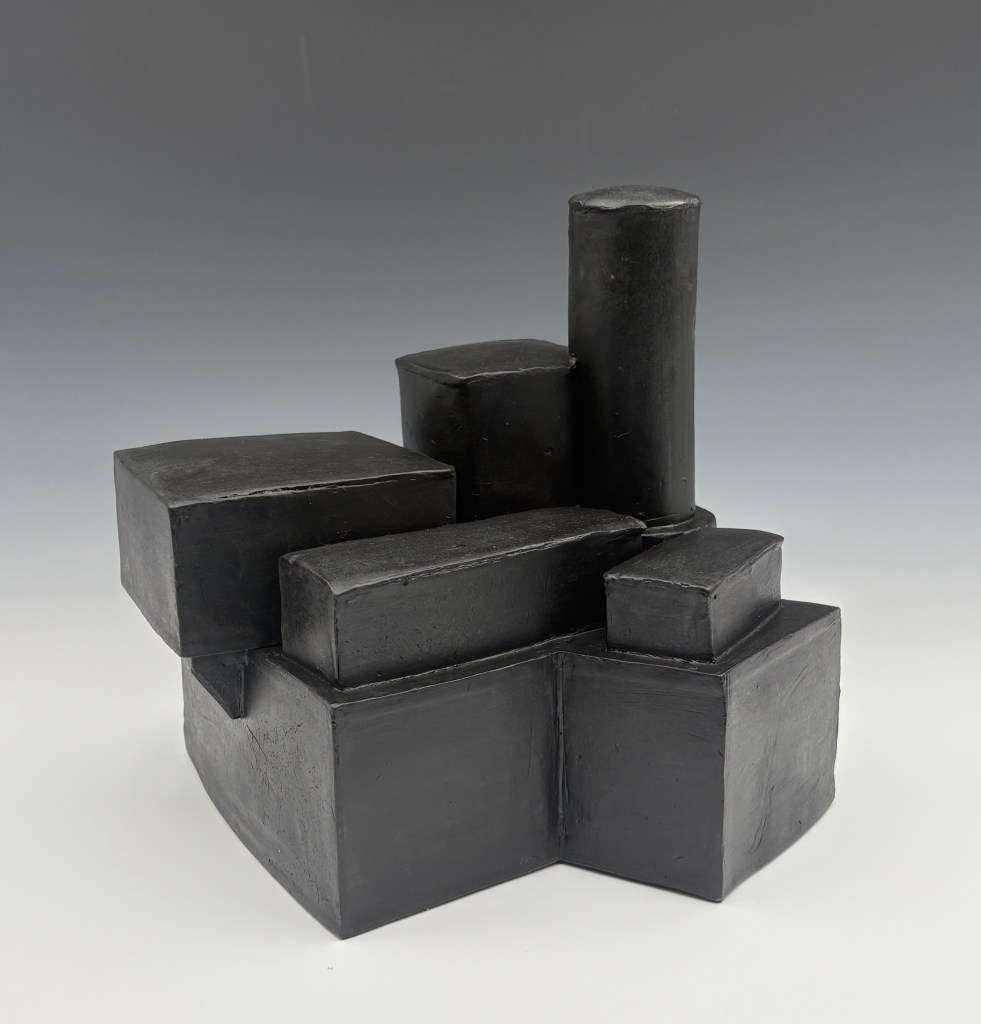
Reliquary, 2025, 9”H x 9”W x 8”D
Drawing on tombs, reliquaries, and sarcophagi, these lidded containers are intended to metaphorically hold collective grief and stand as a monument for the ideals and norms that have been lost in the current political climate: the widespread agreement of what is true, the value for equity across ethnic, racial, sexual preference, and gender distinctions, and environmental preservation. They offer a focal point for intentional acts of acknowledging, grieving, and remembering the moral and civic values that are rapidly eroding.
Candle Votives are the second form included in this series. I relate to the gesture of lighting candles at altars, in cathedrals, and in homes as a practice of processing grief. In conjunction, these votives offer the metaphor of an accumulation of melted wax as a stand-in for the emotional labor of grieving. By undertaking the intentional ritual of lighting a candle, a person pays tribute to a loss and the wax records their grief.
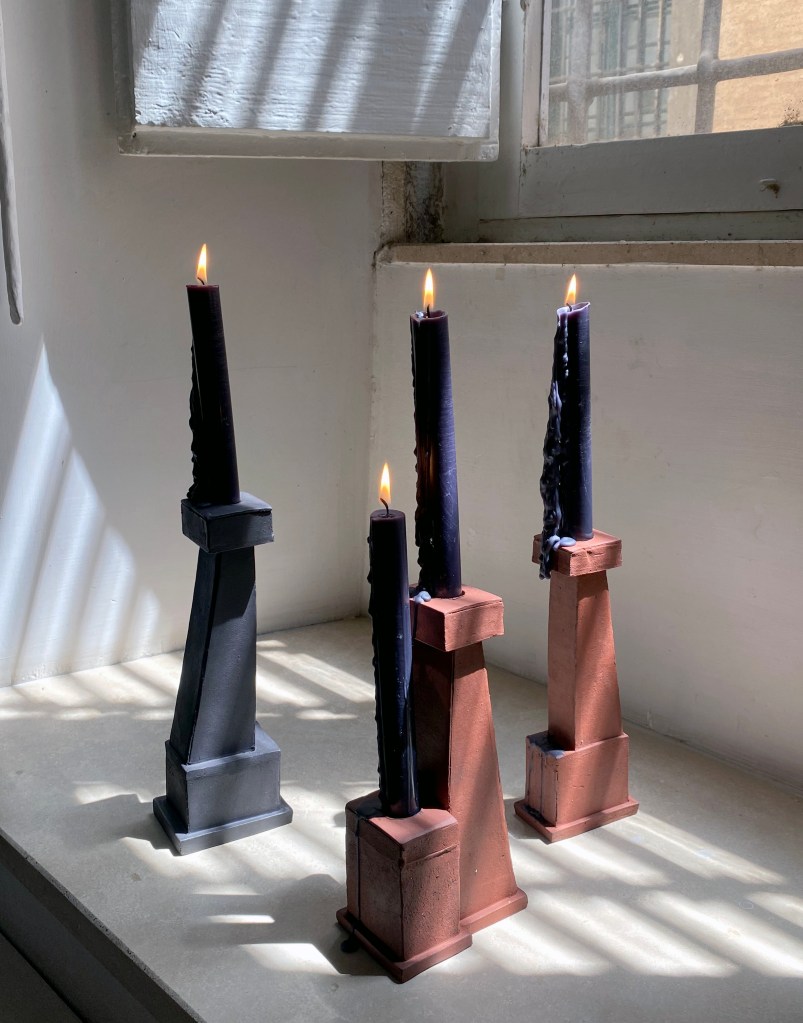
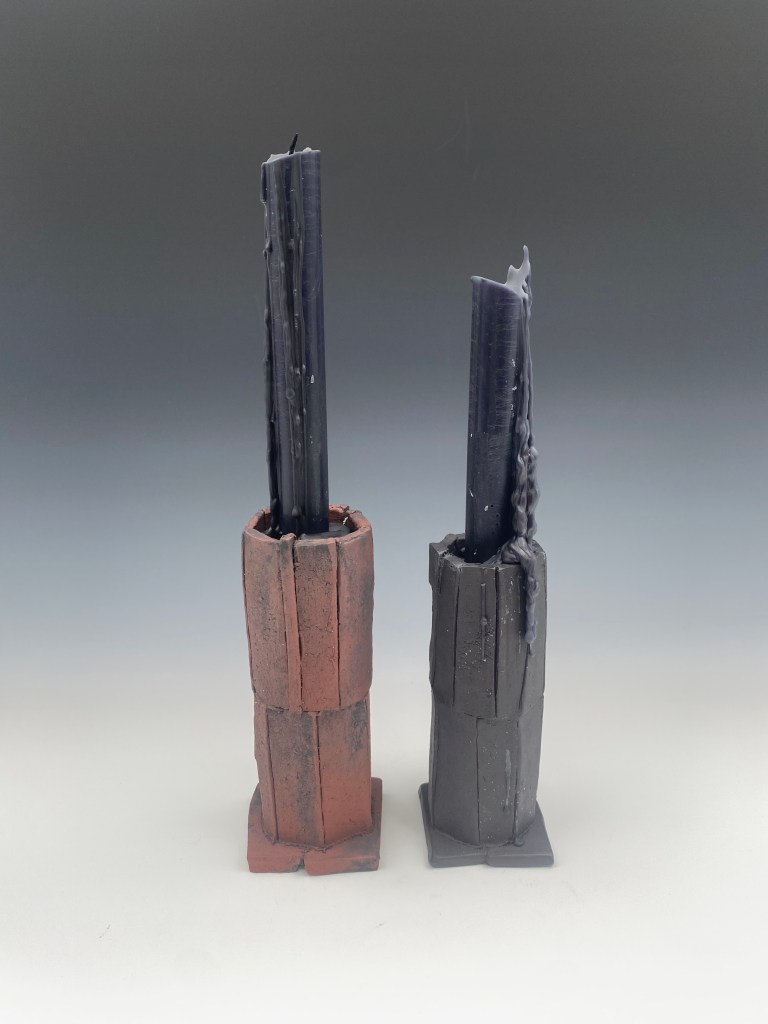
Contraforte, 2024, 9”H x 3.5”W x 3”D Candle Votives, 2024, 7″H x 2.5″W x 2.5″D
Process
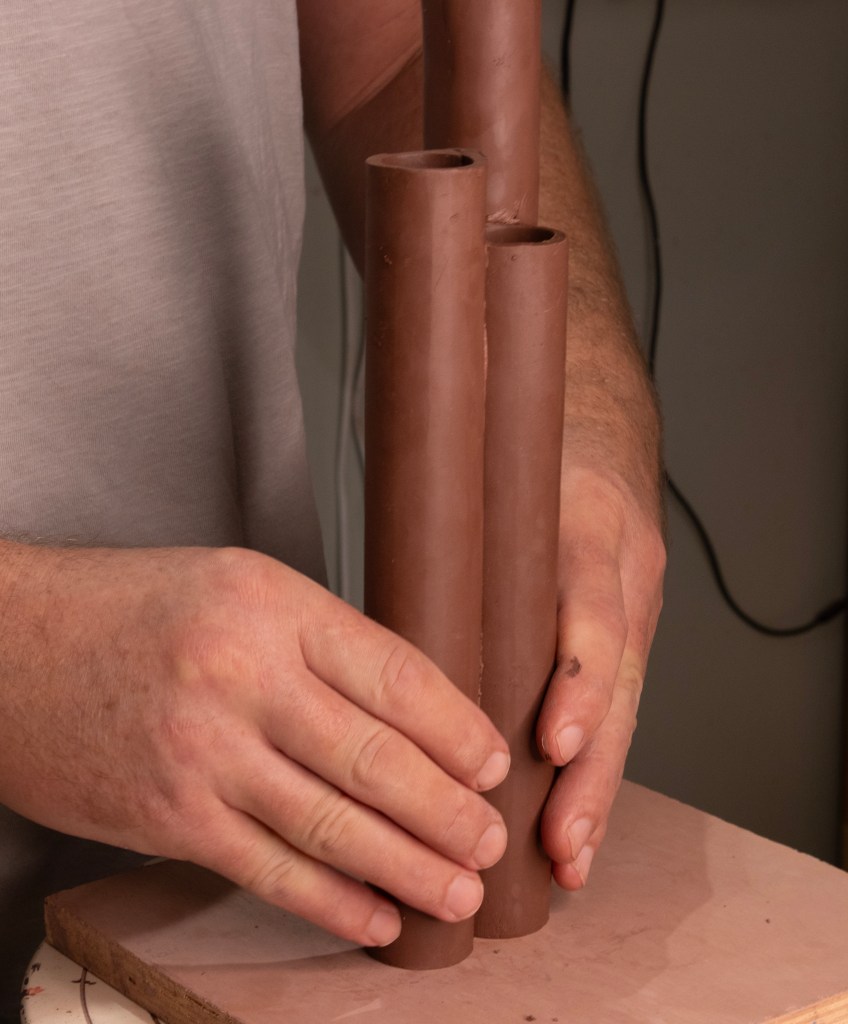
I construct my work predominantly with slabs. I use paper templates to make cylindrical and conical shapes that are bent and altered into geometric forms. Some pieces are built one plane at a time with slabs mitered together at the seams. Inspired by buildings, many pieces employ several intersecting volumes. I make appendages such as handles and spouts through a variety of processes: press molds, drop molds, and extrusions.
The surface is brushed underglaze with a soluble wash applied over it. The interiors are glazed. When painting the work, I mix colors on a palette and apply an underpainting layer that can differ dramatically from final layers applied. These contrasting layers are left visible around the edges of color fields accentuate the layers above. Working while the surface material is still wet, I blend color on the surface to create contrast and variation, leaving brushstrokes visible, and create depth that with goal of drawing the viewer in and consider the emotional content in the work. I follow a similar layering process with the ritual object series that builds gradually to a mournful black finish that may also include streaks or runs of blues, purples or reds.
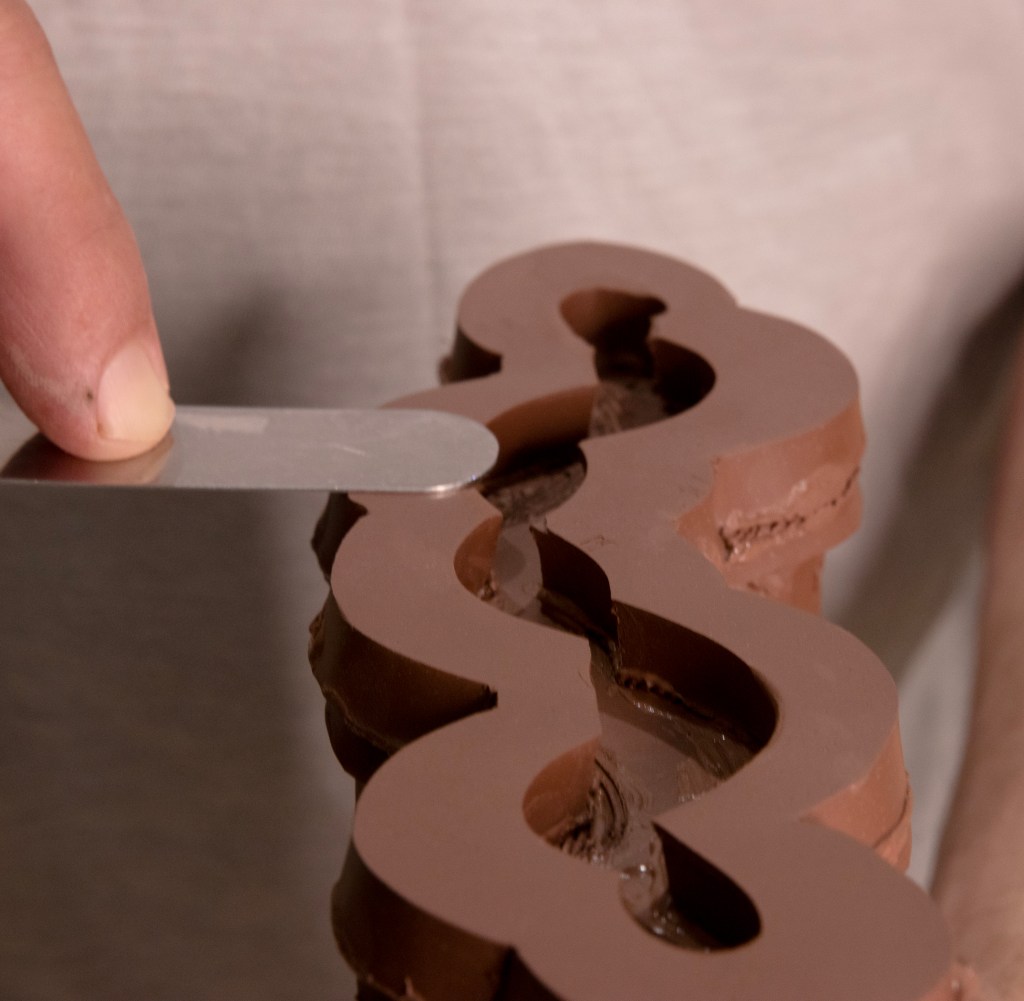
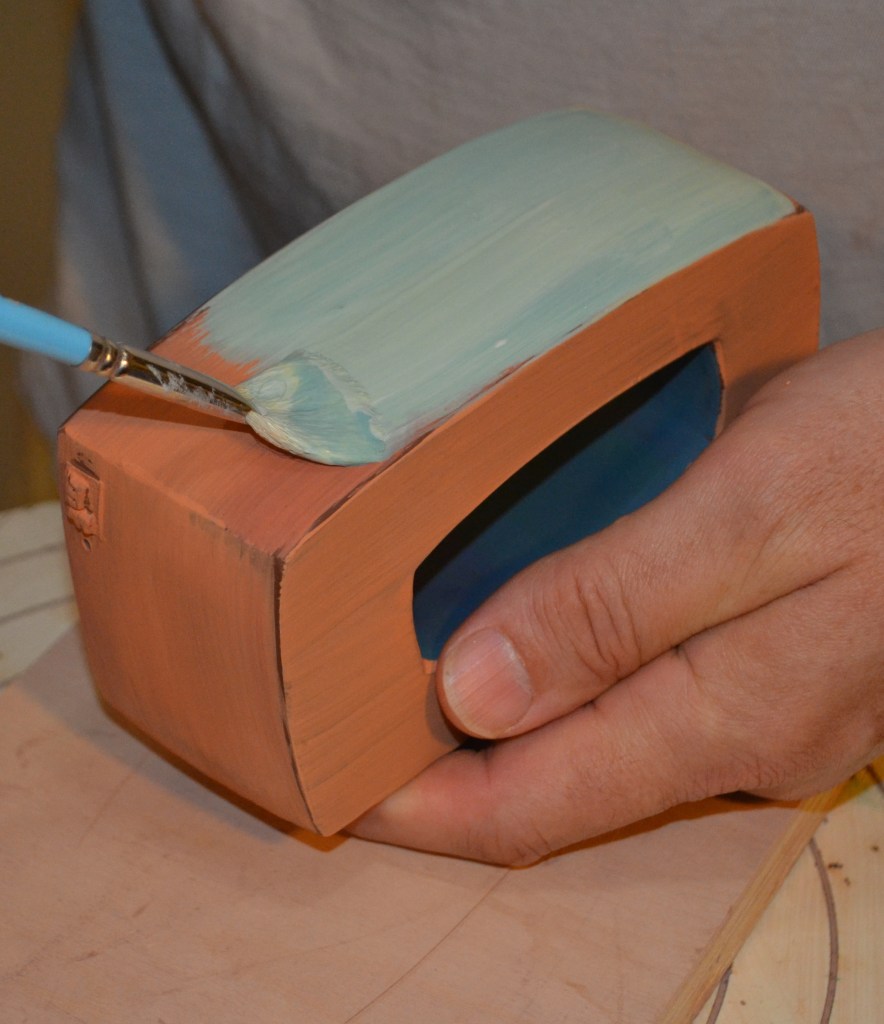
I fire to Cone 3 to retain the rich color character of earthenware temperatures while achieving a more fused claybody. I use electric and soda kilns for the glaze firings. The results in electric firing give vibrant surfaces. Soda firing adds spontaneity that softens the surface by causing variation, neutralizing colors, and erasing some layers to reveal what is underneath.
Dissemination
Installation View of Intentional Acts. Plough Gallery, 2025
Three solo exhibitions are the most important showings of the Abstracted Archetypes series over the last five years. They include 1-person shows at ClayAkar, Schaller Gallery, and Plough Gallery. Additionally, I have been featured artist at venues like Companion Gallery as well as numerous group exhibitions including the Artstream Nomadic Gallery in conjunction with the NCECA conference in Detroit and the Morean Center for Art in St. Petersburg, FL.
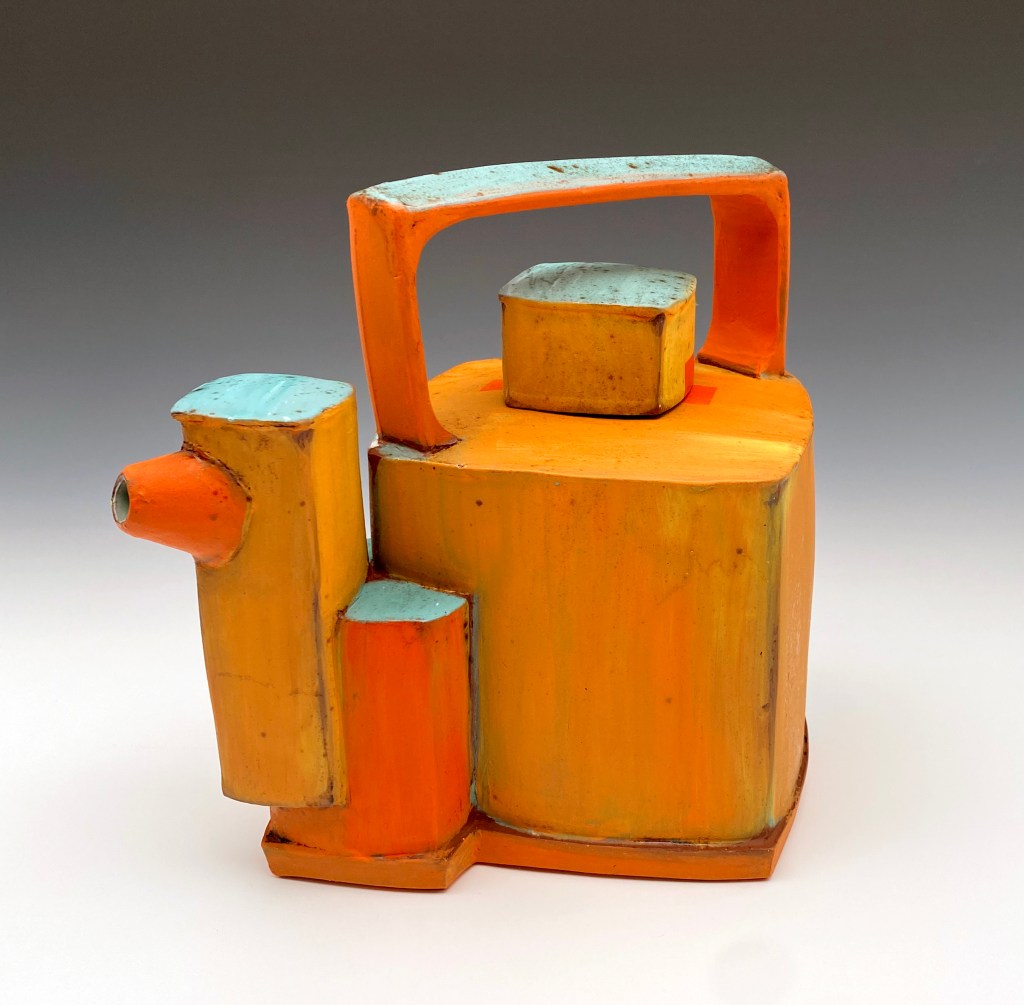
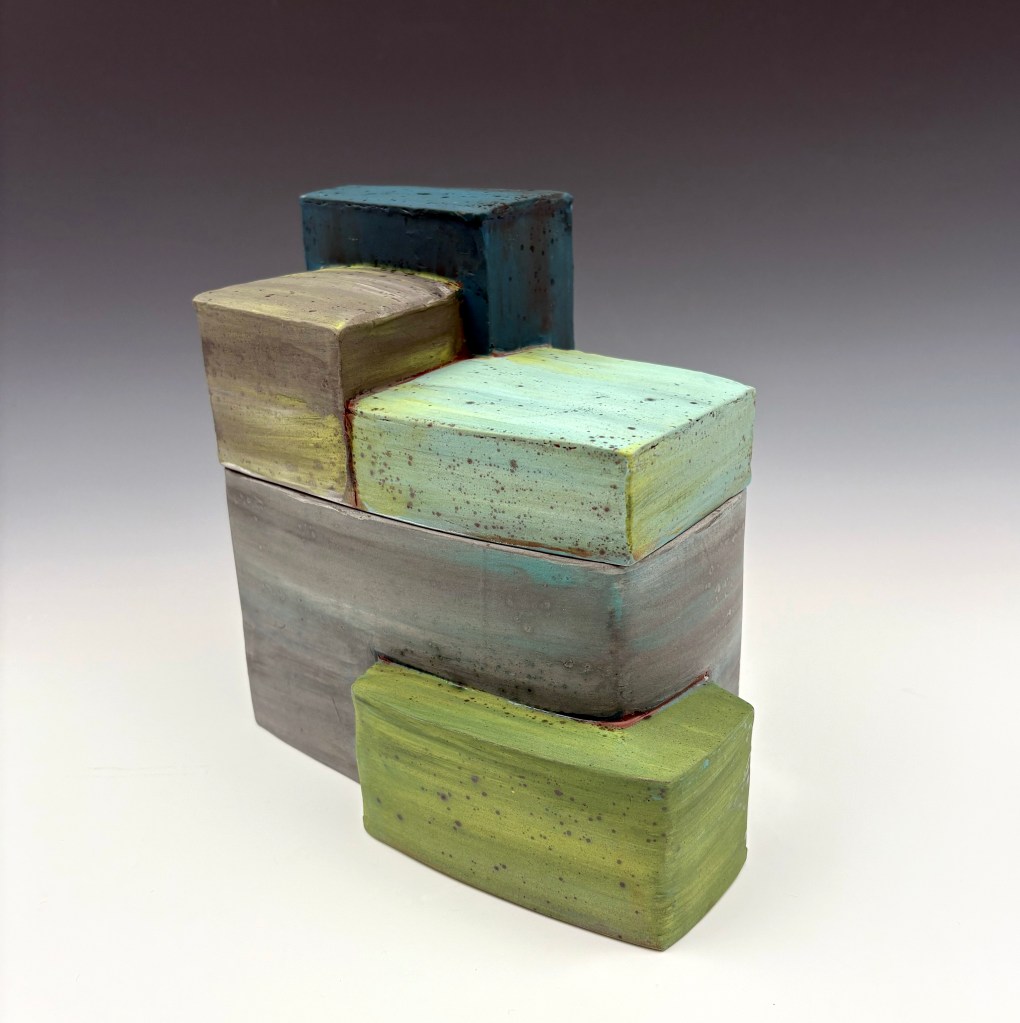
My research in color theory has been recognized through invitations to group exhibitions with themes of color use. During this review period, I exhibited in two such shows: Color Theory at Companion Gallery in Humboldt TN and Color at the Signature Contemporary Craft Gallery in Atlanta, GA. My article, Contextualizing Ceramic Color, that was published in the September 2018 issue of Ceramics Monthly magazine draws on interviews with ceramic artists on their use of color. Included in the article is a nod to Johannes Itten’s, The Art of Color, where I use contemporary ceramic works to illustrate aspects of color theory.
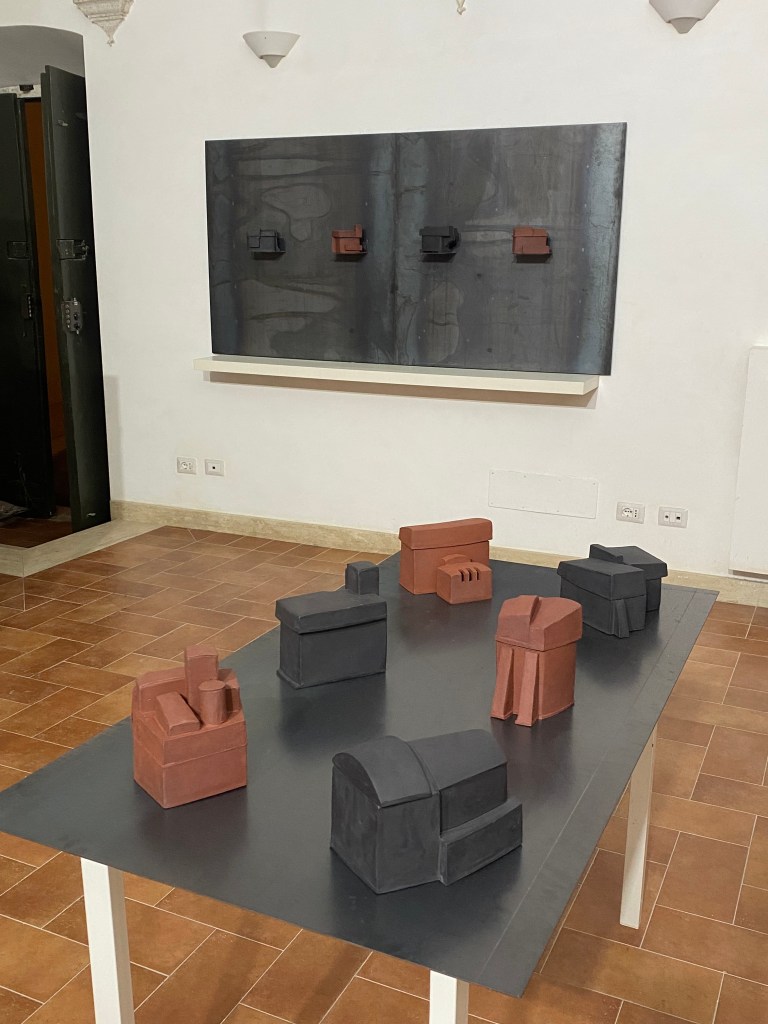
The Ritual Objects line of research is gaining traction through recent exhibitons. The first show of this work, Harvest of Shadows (il raccolto delle ombre), was a 3-person residency exit exhibition at CRETA Rome. The solo show, Intentional Acts at Plough Gallery was exhibition of both series of work. Similarly, both series will be shown in a Featured Artist Exhibition at Red Lodge Clay Center in August 2026. Truth Entombed was shown in Feats of Clay juried by Rhonda Willers. I showed a grouping of pieces in this series in Presence Felt, Florida Ceramics Faculty at the Morean Arts Center, St. Petersburg, FL.Installation view of Harvest of Shadows (il raccolto delle ombre). CRETA Rome, Rome, IT, 2024.
Conclusion
I have refined and expanded my studio practice over the previous five years. The evolution of content, visual communication, and technical knowledge are evident in the two lines of research illustrated for this review. The Abstracted Archetypes series is ongoing and continually developing and Ritual Objects is a new project with potential to deepen in the coming years. My exhibition record prior to and during this review period exemplifies excellence through the peer review process as it operates in our field. This is evidenced by showing my work in solo exhibitions in leading national venues, curation into group shows by gallerists and prominent artists, and publication of images and writing. I am excited by the anticipation of further research as I have residencies scheduled for exploring new ideation at Watershed Center for the Ceramic Arts this summer and at La Meridiana in Certaldo, Italy in 2028. I have exhibitions contracted including a Featured Artist exhibition at Red Lodge Clay Center in August and Florida Now at Florida CraftArt Gallery opening this May. In conjunction with Craft in America’s Handwork: Celebrating American Craft 2026 and curated by Holly Hanessian, Florida Now represents craft in Florida in a nationally coordinated series of exhibitions. I am also actively pursuing international exhibitions such as the Faenza Prize, the Loewe Craft Prize, and the Korean International Ceramics Biennale.
Pourer, 2026, 9″H x 4.5″W x 3″D
 martyfielding-ajmzb